Saturday, September 30, 2006

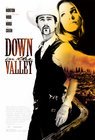
Down in the Valley: Grade A

A

Down in the Valley

Edward Norton (Produced also), Evan Rachel Wood, David Morse, With Bruce Dern. Director and Writer = David Jacobsen.

Norton plays a psychopathic and delusional, but not floridly psychotic young man who believes he is an old west, gunslinging cowboy, but he actually works dead end jobs in the San Fernando Valley. He meets up with lonely teen Wood, and romance ensues. Dad, played perfectly by David Morse, is a cop and smells trouble, with predictable father-daughter fights. The little brother is frightened by it all. The film starts slowly as these relationships build. I got restless after a half hour but I’m glad I waited it out. Norton’s character is charming and persuasive (as psychopathic personalities often are). Good writing there. He gets deeper into trouble with his delusion, dragging the children along with him, since young people have no clue about mental disorder. All the characters and relationships are pitch perfect. ERW was least convincing to me, but that could have been the clunky writing for that character. The photography is beautiful and the cinematography in general is wonderful, with its surreal juxtaposition of “old west” looking scenes and suburban housing projects. Norton occasionally slips into the slurred speech of the retarded (or CP) character he played opposite DeNiro in “The Score” a few years back, but other than that, he is riveting throughout, sometimes doing a Jimmy Stewart imitation. What a talent. David Morse, a second-tier actor you’ve seen a thousand times, is a real standout in this picture. A haunting movie.

Monday, September 25, 2006

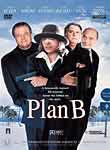
Plan B: Grade D

D

Plan B

Diane Keaton, Paul Sorvino. Director Greg Yaitanes

Keaton works as a secretary for Mob boss Sorvino. He gets captured by a rival gang and she discharges the gun she was holding, killing all the bad guys. Sorvino is impressed and makes her his main assassin. She figures out a way to deceive him. That’s the story, a wasted opportunity. In an early scene she takes a brown hat from a guy and wears it, improbably, for the whole rest of the movie to make her look like Annie Hall. Who voted for that? She grins and mumbles the slapstick anxiety she learned from Woody. Sorvino and the other mobsters have some good lines, but the characters are uninteresting stereotypes. The whole thing is only mildly amusing, not well-made (her New York Cadillac has Florida plates), and basically pointless. Diane Keaton is a fine actor and this is way beneath her, so I have to believe she did it as a favor for somebody.

Sunday, September 24, 2006

Hard Candy: Grade A

A

Hard Candy

Ellen Page, Patrick Wilson, Sandra Oh. Director David Slade

A 14 year old girl (Page) flirts with a 32 yr old photographer online and they agree to a meeting. He invites her to his house, gives her an alcoholic drink, but she turns on him, believing he is a pedophile, and makes him a captive. Shocking developments ensue, in a tense psychological thriller. Sandra Oh has a brief appearance as a neighbor; the rest is cat and mouse between the two principals. Ellen Page dominates the screen throughout with a riveting performance.

After the climactic scene, the final ending seems like an add-on, a twist for the sake of twisting. It is not well motivated and retrospectively alters what we think of both characters, in ways that are inconsistent with the first part of the movie.

The story expresses strong cultural revulsion against pedophilia and so much frustration about the law being unable to stop it that vigilantism seems justifiable. Also expressed is every parent’s worst fear about the dangers of computer social networking. None of those issues is addressed directly in the film, but they drive it. Also, while the movie is very intense, it is not creepy. There is no nudity and both characters are treated with respect. Unlike The Woodsman, there is ambiguity in the characters. The DVD extras are highly educational about the process of filmmaking.

Saturday, September 16, 2006

Lucky Number Slevin: Grade A

A

Lucky Number Slevin

Josh Hartnett, Morgan Freeman, Ben Kingsley, Bruce Willis, Stanley Tucci, Lucy Liu, Danny Aiello. Director Paul McGuigan.

This is a familiar story about a guy (JH) taking revenge on a Mob boss before he himself is killed. How many of those movies have I seen? Nevertheless, the talent here is huge, and all give first rate performances and that makes the move very enjoyable. The story is a bit confusing because some key details are not revealed until the very end when the main character explains what he did (killers in movies love giving speeches to their victims just before they kill them.) Only when you get the “How I did it” speech can you piece together the elements of the story in retrospect. But it all does fit, with only one bit of hand waving to get past a tiny weak spot (why did MF assume that BK was responsible for his son’s death?) The characters are not drawn in depth but are quirky enough to be entertaining. The script promotes racist, sexist, gay, and Semitic stereotypes, but not in an overtly malicious way. The dialog is actually very funny but that is its problem – it is too funny. People don’t really talk to each other like rapid fire Burns and Allen. So the funny dialog makes you think, “funny dialog,” and makes the characters unconvincing. But a few flaws don’t spoil an enjoyable movie.

The Scream Queen: Grade B

B

The Scream Queen

Liz Lavoie, Nipper Knapp. Director Tatiana Bliss. (Digital Video)

LL plays an aspiring Hollywood actress whose only success has been as a screamer in really bad horror movies. The depiction of making the horror movies is a great parody of that genre. But she does have goofy fans, a group of whom graduate from film school and want her in their horror film. She refuses, they kidnap her out to the desert where they make a hilariously stupid movie, and in the process, she kicks her substances habit and starts to notice that the people around her are really quite decent. The whole thing is total silliness, but for a zero budget movie, it is remarkably good, and funny too.

Sunday, September 10, 2006

Friends with Money: Grade A

A
Friends with Money
Jennifer Aniston, Joan Cusack, Catherine Keener, Frances McDormand; Writer-Director Nicole Holofcener.
I’m giving a generous “A” because I love all these actors, even Aniston, who has persuaded me that she really knows what she’s doing. Her character is unlikely, a housecleaner who can’t get a date. What are the odds? But she does a fine job with the role. Her three girlfriends are rich. What are the odds? There is some hilarious satire of the wealthy that hits easy targets, but dead center. There is no real story, just girls having lunch together and being unintentionally funny. There is a funny bit with one of the women’s husbands being naively gay. Joan Cusack is just riveting; can’t get enough of her. McDormand breaks out of “Fargo” mode and does a great, original job. Keener is actually the weakest of the bunch, but still compelling. Very strong directing. Great sets. Great writing. Can’t remember any music.

Troublesome Creek: Grade C

C

Troublesome Creek: A Midwestern

Jeanne Jordan and Steven Ascher, filmmakers.

This documentary of Iowa farmers trying to hold on to their land in difficult economic times is an oft-told story and there is nothing new here. I have probably seen three other documentaries just like it on Nightline, Dateline, Whateverline, on TV. This won at Sundance, and has rave reviews from newspapers quoted on the box. Maybe you have to be from the Midwest to appreciate it. I did five years in the Midwest and was never so glad to get away from a place. The subtitle of the movie is accurate: this film captures the simple, dull, plodding, sentimental, unself-aware life of a Midwest farm community. The scenery and photography are notably good. The gritty, kitschy, unaesthetic settings are absolutely real. Food, clothing, furniture, language – every detail of the ghastly culture is captured. It is a well-made documentary about a tired topic.

Sunday, September 03, 2006

Manderlay: Grade B

B

Manderlay

Bryce Dallas Howard, Danny Glover, Willem Dafoe, Isaach De Bankole, Lauren Bacall; Director Lars Von Trier

BDH and her gangster father WD find a derelict plantation in Alabama in 1933. She discovers that the black workers there are all slaves. Shocked that slavery still exists in America, she confronts the dying plantation owner, Bacall. Bacall, who looks dead even alive, dies and BDH throws open the iron gates and declares all the workers free. They remain in place, ostensibly because of total passivity bred by institutionalization. She tries to teach them to value freedom, but in the end gives up in disgust and leaves.

What’s good about the movie is Von Trier’s stylistic moviemaking. It is done just like Dogville, with virtually no sets other than a kitchen table or the frame outline of a building. Actors walk around on a bare stage illuminated by spotlights, knocking on imaginary doors. I enjoy that minimalism. It really makes the acting and writing stand out. However, it was already done in Dogville, so what’s the point of doing the exact same thing again? That’s not creative. Supposedly, this movie is #2 of a trilogy, so maybe that justifies the repetition, but I found the concept less interesting than I did the first time.

What’s wrong with the movie (other than the need for editing), is the writing. None of the characters is psychologically realistic. Glover turns out to be a big time Uncle Tom, but that is inconsistent with his character as presented in the first half. And so on for other characters that show any spark of life at all. The black slaves are presented as children, if not subhumans, with no interests, values, motivation, or intelligence. So when one of them criticizes BDH for being a hypocritical, white, self-serving do-gooder, the viewer wonders where that animosity comes from. The same is true for each time any flash of emotion is shown. It is just incongruous. Von Trier mechanicallyand cynically pushes racist buttons, without justification. Glover, who is a socially responsible person, might have seen the script as a sociological commentary on the impossibility of changing centuries of culture with a proclamation of freedom. But I think the movie is shallow and malicious, even racist, and not in an ironic way. Yet here I am still typing. I begrudgingly acknowledge that it is an important movie.

Looking for Comedy in the Muslim World: Grade B

B

Looking for Comedy in the Muslim World

Albert Brooks: writer, director, star

This movie starts out hilariously, with AB as an out of work, second-tier American comic who is hired by the US Government to go to India and Pakistan and find out what makes Muslims laugh. The humor is extremely subtle at points, sarcastic, ironic, and with some wonderful digs at politics and Hollywood. At about the halfway mark, when he gives his first stand-up performance in India, his show bombs, and the movie starts going south. The jokes in his act are so stupid and inappropriate that even a nine-year old could do better. Why does Brooks take the movie in that direction? Was he afraid to not offend Middle-easterners by showing they do not appreciate American humor? Or was he afraid not to offend Americans by presenting a kind of humor they couldn’t understand? The solution he chooses, to make fun of himself and drop the movie’s story line altogether, is veryunsatisfying.

Monday, August 28, 2006

Where the Truth Lies: Grade C

C

Where the Truth Lies

Kevin Bacon, Colin Firth, Alison Lohman; Director Atom Egoyan

A reporter (AL) tries to find out who killed a young woman who was found in the hotel room of KB and CF, television stars, both of whom had alibis. She interviews the retired stars and the story is told in flashback to the 1970’s. However the flashbacks tell mainly about the sexual exploits of the KB character and offer no clues or story development about the mystery, which is virtually forgotten until the final scene when an arbitrary whodunit is revealed. So as a mystery movie, it is lame. As a character study, there is not much either. KB plays an arrogant womanizer, a stereotype. CF has a secondary role in the movie. Lots of women are shown prancing around naked and having sex, in prurient and gratuitous displays. The body doubles sometimes don’t even match within a scene. There is no point to the sexuality other than to show naked women. Acting is weak throughout, and the idea that KB and CF are entertainment stars is unconvincing, given the samples shown of their work. For a period piece, the interior sets are good, but the spirit of the times is not captured. Egoyan has been consistently disappointing for me, so I put him in the same category as Speilberg: vastly overrated.

Sunday, August 27, 2006

Swindled: Grade C

C

Victoria Abril, Ernesto Alleria, Federico Luppi; Director Miguel Bardem.
Spanish (subtitled), Aka "Incautos"

A group of crooks sets up a real estate con with confederate “investors” so the real investor feels OK putting in his cash. The movie follows The Sting, Mission Impossible, Silver Bears, Heist, and other movies of this type, with the idea of hugely elaborate setups. But in the last half, there are so many twists and turns that the movie becomes about twists and turns rather than any story, and I lost interest. Not one false briefcase full of newspaper instead of money, but five. Not one false shootout, but multiple. Is that a real priest or a confederate? Why did the husband come back to life after having been poisoned, but then played no further role in the story? Why didn’t anyone open Gitano’s briefcase to see what was in it? Etc., etc. High dollar production values, good acting, but in the end, an unsatisfying story. It would have been better as a parody of con movies, but it takes itself seriously throughout.

Saturday, August 26, 2006

Ask the Dust: Grade D

D

Ask the Dust

Colin Farrell, Salma Hayek, Donald Sutherland; Director Robert Towne

Farrell and Hayek meet in 1930’s LA, he a struggling writer, she a waitress. They fight, argue, then predictably fall in love. Then she dies of TB. That’s it. There is utterly no plotline. The dialog is trite, scenes cliché, revealing racism. In depression-era LA? Shocking! No acting takes place (except Sutherland). The stars look good but there is no chemistry. Shouting is how emotion is expressed. Dreadful directing. The pace is mind-numbing. Dark, muddy, colorless photography. Poor period music. Costumes are too cute to be believed. The only saving graces are 1. Towne (who wrote Chinatown) has a good eye for period LA sets, and 2. You get to see both Colin and Salma stark bare naked. Is that enough to save this movie from utter failure? I’m feeling generous.

Saturday, August 19, 2006

Pure: Grade B

B

Pure

Molly Parker, David Wenham, Harry Eden, Keira Knightley.
Dir=Gillies MacKinnon

A 10 yr old boy (DW) figures out that his mother (MP) is a junkie and what that means. She tries to kick it but can’t. Social services come to take the child into foster care. She finally gets methadone treatment and there is a quasi-happy ending. There isn’t much new here as far as the depiction of heroin addiction, or in the relationship between the boy and mother, but the outstanding acting, photography, and music raise this picture to above average. I think it's criminal to let or make young children be big screen actors, but I admit that David Wenham does an amazing job. Keira Knightley was a complete unknown then (2002) but puts out a dazzling performance. Molly Parker plays the junkie mom to perfection. The sugar-coated ending allows you to have hope, even though, intellectually, you know it doesn’t work that way.

Monday, August 14, 2006

V for Vendetta: Grade A


A

V for Vendetta

Natalie Portman, Hugo Weaving, Stephen Rea, John Hurt

This allegorical political action-thriller is set in an Orwellian future when the fascist British government controls the behavior, thought and beliefs of the cowed population. “V”, a masked terrorist or freedom fighter (depending on which side you are on), is a mixture of Zorro, Batman, and the Phantom of the Opera. He kills government officials, blows up state buildings, and goes on TV to suggest that “We’re mad as hell and we aren’t going to take it any more.” Natalie Portman becomes radicalized after her head is shaven by interrogators in one of many scenes eerily evocative of the Nazi regime. She becomes sympathetic to V and the revolution. Detective Rea hunts them both, despite his conscience and obstruction by Hitlerian Chancellor Hurt.

The characters and story are derived from a comic book (or “graphic novel”), explaining the silly visual clichés. Perhaps to offset that two-dimensionality, when anything moves, whether a door opening or a hat being taken off, it is accompanied by ear-splitting, earth-shaking, irrelevant noise. Despite these contrivances, the movie carries a serious political message that is basically seditious if you look past the wild costumes and sets. It starts slowly, with stentorian speechifying and theatrical posturing, but once it gets going, the fine acting, excellent photography, and well-delivered message keep you hooked.

Sunday, August 13, 2006

Sorry, Haters: Grade A

A

Sorry, Haters

Robin Wright Penn, Abdellatif Kechiche, Sandra Oh. Writer, Director: Jeff Stanzler.

RWP is a phenomenal actor. Her performance is riveting in this psychological thriller. AK also does a superb job. Penn is psychologically distraught after a divorce she claims was caused by “home-wrecker” Oh. She meets AK, a cab driver from Syria with a single mom sister in need. Penn is a media person and decides to help the sister reconnect with her Syrian husband who has been sent to Gitmo after being “profiled” at an airport. Or maybe there’s more to it than that. The story is realistic, compelling, thought-provoking, and unpredictable. Great Mid-Eastern music in the opening.

The Confederate States of America: Grade B

B

The Confederate States of America

Kevin Willmott, writer and director

This satire of American history and social attitudes examines the idea: what if the South had won the Civil War? The movie is presented as a television show on American history since the “War of Northern Aggression”, complete with commercials, and using close up shots of expert historians giving sound bites, Ken Burns’ tinkling pianos over still photos, and actual archival historical footage.

The South won, slavery was imposed nationwide for economic and cultural reasons, Lincoln was exiled to “Red Canada.” The idea is fun, well-researched, and there are some ironically funny surprises, but it all becomes routine after 20 minutes. The commercials are the best part, for genuine American products like Darkie Toothpaste. Clearly a work from the heart, it has a genuine message about racism in America, but the movie takes the TV show joke too seriously, and that’s what keeps it from perfection. It needed more goofiness like the scene of Lincoln in blackface escaping to Canada with Harriet Tubman. It will be valuable in the college classroom.

Saturday, August 12, 2006

Inside Man: Grade D

D

Inside Man

Denzel Washington, Clive Owen, Jodie Foster. Director Spike Lee

With all that talent, how can a project go so wrong? It’s a traditional bank heist movie, and the photography, script and directing are as clichéd as you can imagine. Crooks disguised as painters, SWAT team and snipers surround the building, hostage negotiator DW plays cat and mouse by phone with bad guy CO. Seen it all before. The first half is like a really poor remake of Dog Day Afternoon. Then the story line takes a couple of implausible twists. Christopher Plummer is old, I admit, but there is no way he would have been head of a bank in 1940. Jodie Foster snaps her lines like a smart-alec, but does no real acting. The story is full of holes and the characters are unmotivated. There are a couple of creative moves by Spike Lee, one where DW walks or glides to his fate, and the interrogation room, which is done in a different kind of film stock or something to indicate flashforward. Why doesn’t he do the right thing with his creativity?

Sunday, July 30, 2006

Side-Effects: Grade B

B

Side Effects

Katherine Heigl. Director=Kathleen Slattery-Moschkau

KH plays a pharmaceutical salesperson, calling on doctors and trying to persuade them. She battles her way forward in the fast lane, hyping the drugs, ignoring dangerous side-effects. She burns out and decides to tell nothing but the truth about the drugs to the doctors. Her success consequently becomes phenomenal and she is the star sales rep. Finally she gets conscience and quits in a dramatic ending.

The film is an indie made on a shoestring, and that may be the reason why it does not quite hit on all cylinders. The acting is superb, the story line important, the script funny, and the photography competent. Music is several pop bands overlain (not my cup of tea, but quite adequate). The problem is that we don’t know why she burns out, or why the doctors start buying more when she tells the truth, or how her crisis of conscience comes about. There is just not enough detail there (not enough scenes). So it is more of a sketch of a movie than a finished movie. The directing is good except for one slip-up, a gratuitous nude scene, for which the director essentially apologizes in the DVD extras.

Billy Connolly Live in New York: Grade B

B

Billy Connolly: Live in New York

Billy Connolly

BC is a very well-known British comic who doesn’t really tell jokes, but relates autobiographical stories, in the style of Ellen DeGeneris, perhaps. His observations are acute, his humor self-effacing. He has a good sense of irony, and of course, the charming Scottish accent. I found the act to be light-hearted, not angry, and despite mandatory overuse of “fuck,” not vulgar. But it was also not very edgy, politically or socially, and consequently, not really sharp or memorable. Funny, but too tame for me.

Second Best: Grade B

B

Second Best

Joe Pantoliano, Jennifer Tilly. Writer, Director=Eric Webber

JP plays a failed NYC editor, now an unpublished author and unemployed “loser” living in New Jersey. He hangs out with his buds at Cheers-like taverns and plays terrible golf at a muni while writing sardonic flyers that he staples to telephone poles, about the life of the loser. JT is his loopy (and married, of course) girl friend, also a loser. We get access to the flyers when he reads them to his gang and in voice-overs. They are witty, angry, and depressed rants about mindless living, pretension, and bad luck. Then his successful friend visits from Hollywood and his jealousy goes into overdrive. The acting and writing are first class. The photography does some interesting things with orange filters. But I just didn’t buy the premise of a natural “loser” personality. The solutions to his woes are obvious. Since I never related to him as a real character, the movie was like a mildly amusing stand-up comedy act. Above average though, worth watching.

Monday, July 24, 2006

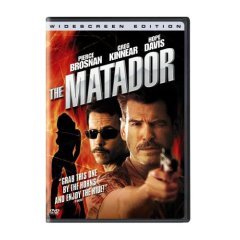
The Matador: Grade B


B
The Matador

Pierce Brosnan, Greg Kinnear, Hope Davis. Dir=Richard Shepard

Brosnan gives an electrifying performance as a paunchy, grizzled, drunken, burned-out assassin having an existential crisis. This is not the monosyllabic James Bond, but a garrulous, vulgar, debauched character with enormous range of expression. It completely changes my opinion of Brosnan as an actor. Where has he been? One is tempted to credit director Shepard for drawing out such a stunning performance, but who knows what goes on in filmmaking.

PB meets businessman Kinnear in Mexico and they go to a bullfight together (implying that PB was once the “matador” of assassins) and form an unlikely and hilarious friendship. There is no overall story. A lot of themes and suggestions don’t go anywhere and some scenes don’t make any sense. There is no particular ending. It seems like either bad editing killed the story or good editing salvaged an incoherent mess. The result is worth looking at either way.

One Last Ride: Grade C


C
One Last Ride

Patrick Cupo, Chazz Palminteri, Charles Durning

Cupo plays a compulsive horse race gambler. The movie shows his self-delusion, predictable humiliations coverd by bravado bluster, spiraling loss of friends, family, job, marriage, and of course, money. Written by somebody who obviously knows compulsive gambling, it is completely convincing. However, this story has been told many times, and there is nothing new here. Chazz Palminteri plays a marvelous, patch-eyed, evil loan shark. The acting is competent throughout, but the dialog is repetitive and clichéd (no problem, I got it covered), and the characters are stereotypes. It plays more like a bland television drama than a theatrical movie.

Sunday, July 09, 2006

Find Me Guilty: Grade A

A
Find Me Guilty
Vin Diesel, Ron Silver, Annabella Sciorria, Peter Dinklage
Director=Sidney Lumet

Vin Diesel can act. Who knew? This is a lightweight piece, with VD as a mafia gangster defending himself in court along with 20 other mobsters who have attorneys. He wisecracks his way to acquittal. Only the fact that it is a true story, using actual trial transcripts, makes it believable. The directing adheres to a realist theme, which kept me engaged throughout. VD's performance is funny but genuine, so the film is not a comedy. The cool jazz music is excellent, although unrelated to the movie. Mobsters don’t like jazz, do they? Just laying down a sound track is an improvement over the usual use of a score to inform us what we are supposed to feel. A rousing Louis Palma number is thrown in for the credits. Ron Silver does an outstanding job, as does Peter Dinklage. Annabella Sciorria leaps off the screen in her brief scene. She has incredible presence.

Saturday, July 08, 2006

Nine Lives: Grade A

A

Nine Lives

Rodrigo Garcia, writer and director. With Glen Close, Dakota Fanning, Joe Mantegna, Aidan Quinn, Holly Hunter, Sissy Spacek, Robin Wright Penn, Elpidia Carrillo, and others.

This is a tour de force for Garcia. The nine short stories present vignettes of women’s lives in 10 to 15 minute slice of life mini-dramas. Each mini-movie is shot in one take – no editing, so the quality of the performances is edgy and alive, and the camera becomes a character in the scene. But the real star of this picture is the writing. Each of the stories is an existential gem. Women (and the people around them) confront death, love, confusion, aging, loneliness, memory and tragedy. Each story is poignant and intellectual at the same time. Not all are equally effective. The opener, in which Elpidia Carrillo plays an inmate in a women’s prison, is riveting and memorable. The second one is also commanding, then the third is a little flat. Glen Close’s scene with Dakota Fanning in a cemetery is extremely well acted, but doesn’t do anything. Others, such as the woman (Kathy Baker) in surgery prep for a mastectomy with her husband (Joe Mantegna) are absolutely gripping. The dialog on that one reminded me of Samuel Beckett. Stunning performances all around.

Imagining Argentina: Grade D

D
Imagining Argentina
Antonio Banderas, Emma Thompson

Banderas directs a children’s theater in Buenos Aires during the mid 1970’s during one of South America’s “dirty wars” in which thousands of ordinary people were “disappeared” by the dictatorial government. His wife is disappeared and he tries against hope to find her. The movie is a plodding docudrama of a dirty war, but then it takes a surprising and improbable twist and Banderas becomes psychic, able to locate or at least tell people the status of their missing loved ones. This was probably done to keep boredom at bay. It is an important political commentary, about events that few Americans know anything about, so for getting the message out, it gets high marks. But as a movie, it stinks. Banderas mutters inanities stone-faced while Emma Thompson acts circles around him. But since she is the one that gets disappeared, early in the movie, we don’t see much of her. There are no other redeeming qualities.